Feast your eyes on these stunning cloisonne pieces:
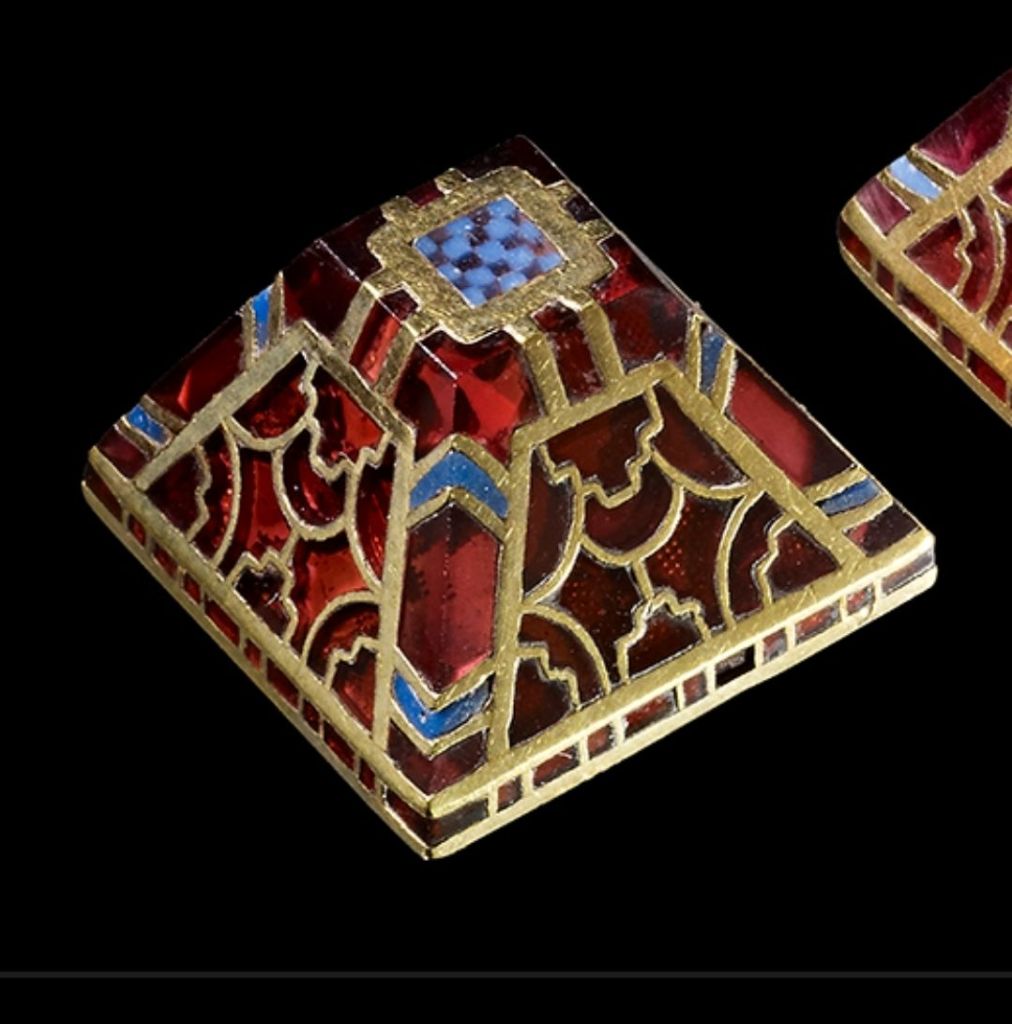
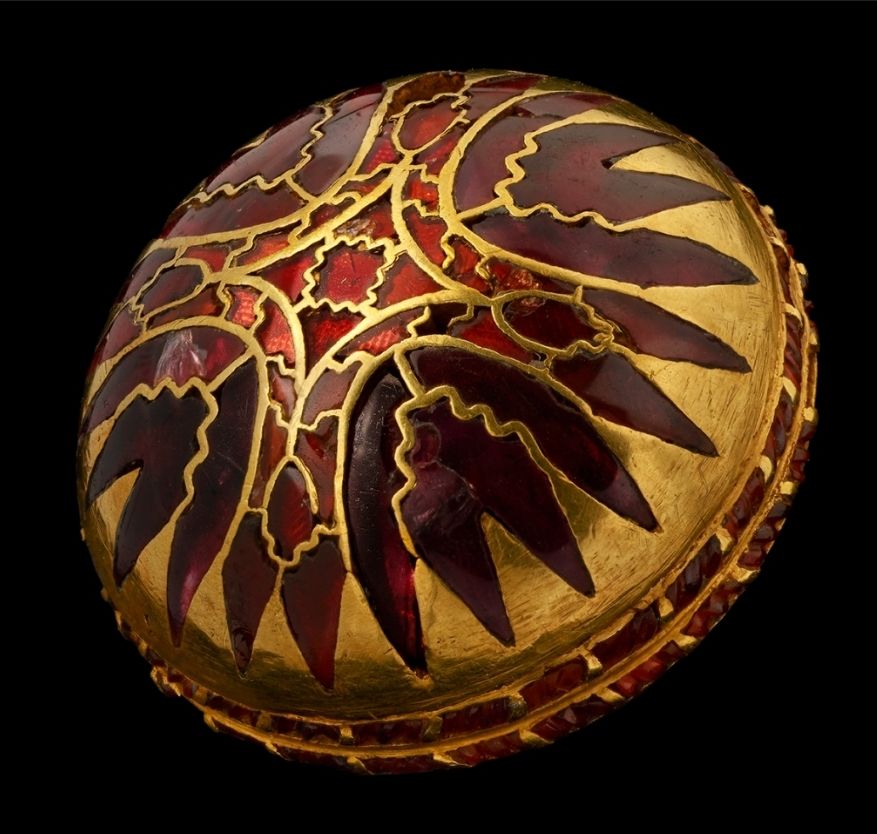

They are made with flat pieces of garnet. Not only that, “There is even more going on beneath the surface of cloisonné objects. Each cell was filled with a paste-like blend of calcite, quartz and beeswax. This was not a glue to fix the garnet in place, the tension of the cell walls is thought to have done that. Instead, it formed a ‘bed’ that raised the garnets flush to the object’s surface. Onto this paste, and beneath the gem itself, was the pièce de resistance: a little piece of magic that unleashes cloisonné’s unique beauty. It is a gold foil, wafer thin, and usually textured with a waffle-like pattern. This tiny flake packed an enormous punch, catching the light that passed into the garnet and reflecting it back outwards, to make the stone glimmer and glow. Without it, even the finest quality garnets risked looking dull and dark. With it, the gems reached their full potential as vivid, sparkling treasures.”
So – when were these made?
A. 1st century (Classical Era)
B. 5th-10th century (Dark Ages/post Roman Empire)
C. 15th century (Renaissance)
D. 18th-20th century (Modern)
The answer is A – approx 600AD. Can you believe it? The fine cloisonne, the worked garnets, the sheer amount of gold, the artistic beauty of the pieces. These are from the Sutton Hoo funeral boat treasure hoard found in England just before WWII.
Read the absolutely fascinating story of the geological origin of the garnets here, which were found to be from India, Sri Lanka and Czechia: https://www.britishmuseum.org/exhibitions/silk-roads/sri-lanka-suffolk-sutton-hoo-and-silk-roads
See these items at the British museum: https://www.britishmuseum.org/collection/death-and-memory/anglo-saxon-ship-burial-sutton-hoo
 WearyTravelers.net