It was a busy weekday morning and the taxis are taking a while to arrive at the hotel. No time for breakfast! Get on the train, we’re going to Ravenna! On the platform the train was closing it’s doors before I realized it was my train! You must pay attention at the station! The train arrives and leaves pronto! I futilely tried to pry the door open with my hand and the guy to my left gives me a look and presses the open button. Duh.
After lollygagging on the train for an hour, check to see if tickets are required. Of course they are. So about 10min before arrival, buy advanced tickets for the Ravenna UNESCO sites that you didn’t know you needed. There are 5 sites to see and you have to pick the entry times. How far apart are they? How long do we need at each one? Who knows? One site has just one time slot left today, but this is not revealed until the end, so now in my site sequence of 5 I have a site I only get 30 minutes at including time needed to walk to the next one. And the website won’t let me discard the cart and start over. Ugh.
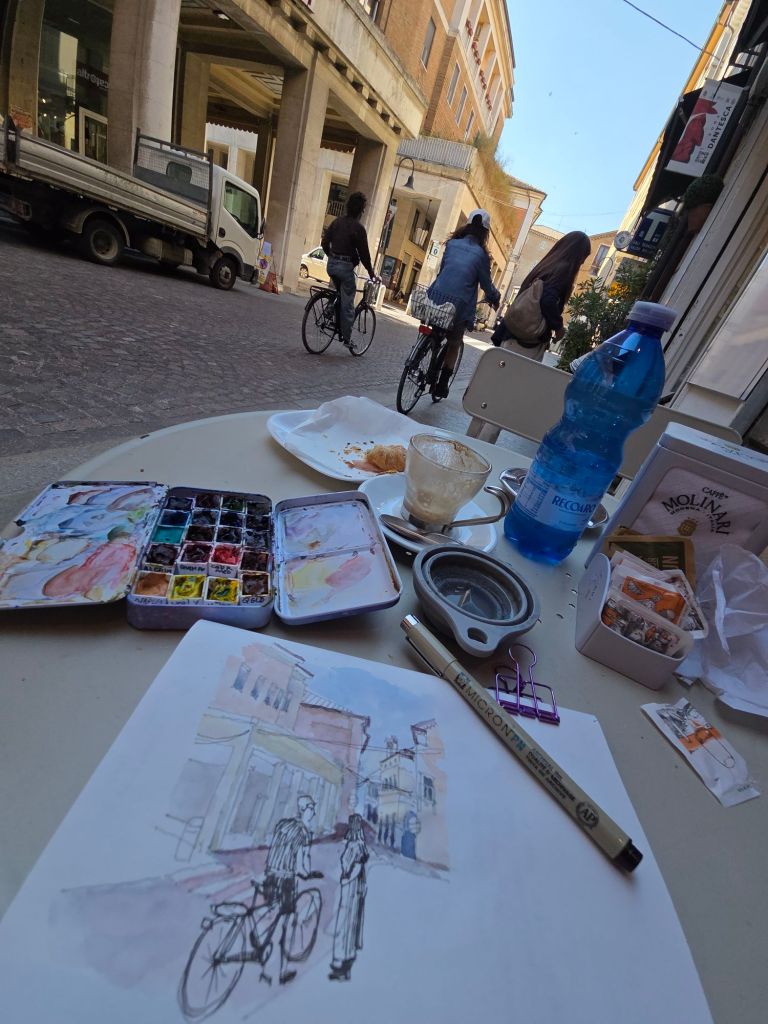
Quick sandwich and macchiato at 11am at a random sidestreet cafe in Ravenna, no time for optimized dining, but always time for plein air. Google’s recommended restaurant opened at 11 but only serves food from noon? Rude waiters are such a huge drag. I should have said “change your freaking sign”. My retail job has killed much of my Japanese reticence to deliver bad news.
The 3 best locations are the small Mausoleo de Galla Placidio, the ancient Battistero Neoniano, and the formidable Basilica di San Vitale. Just get the 5 location ticket and allow at least 1 hr between each if you can.
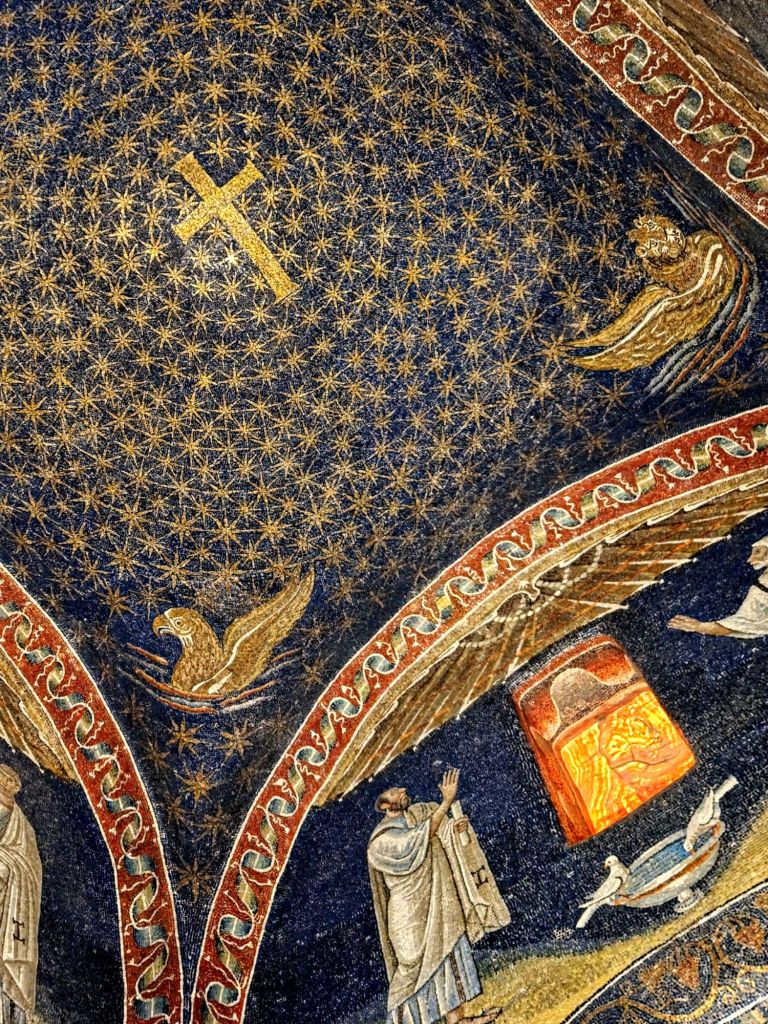
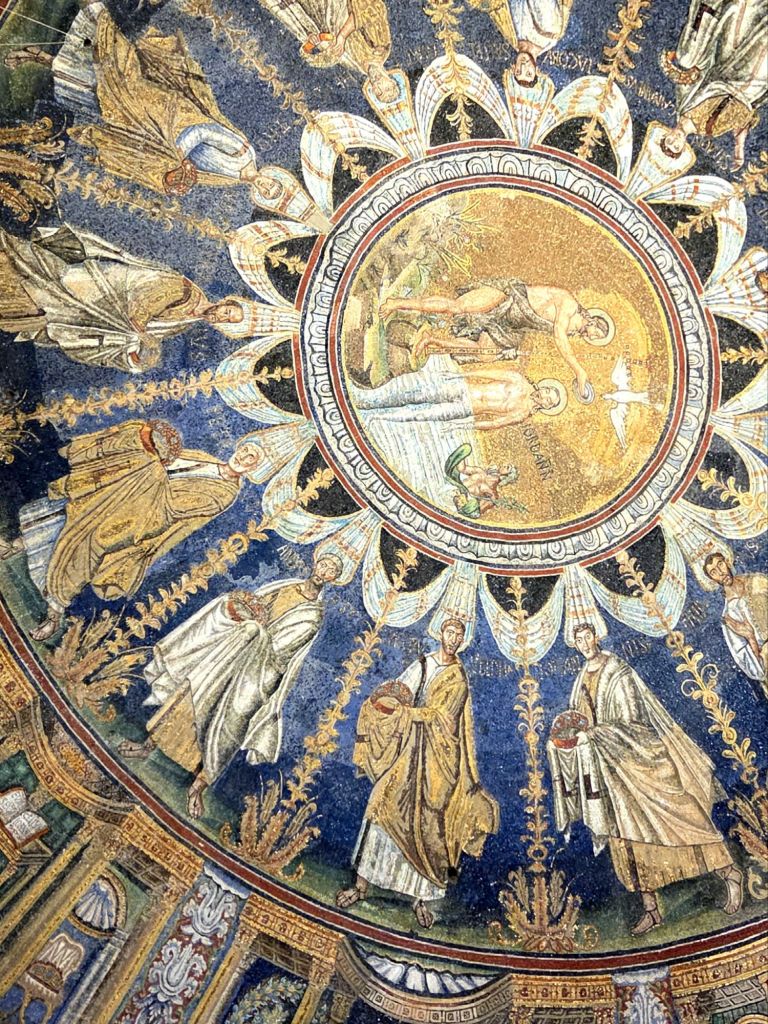
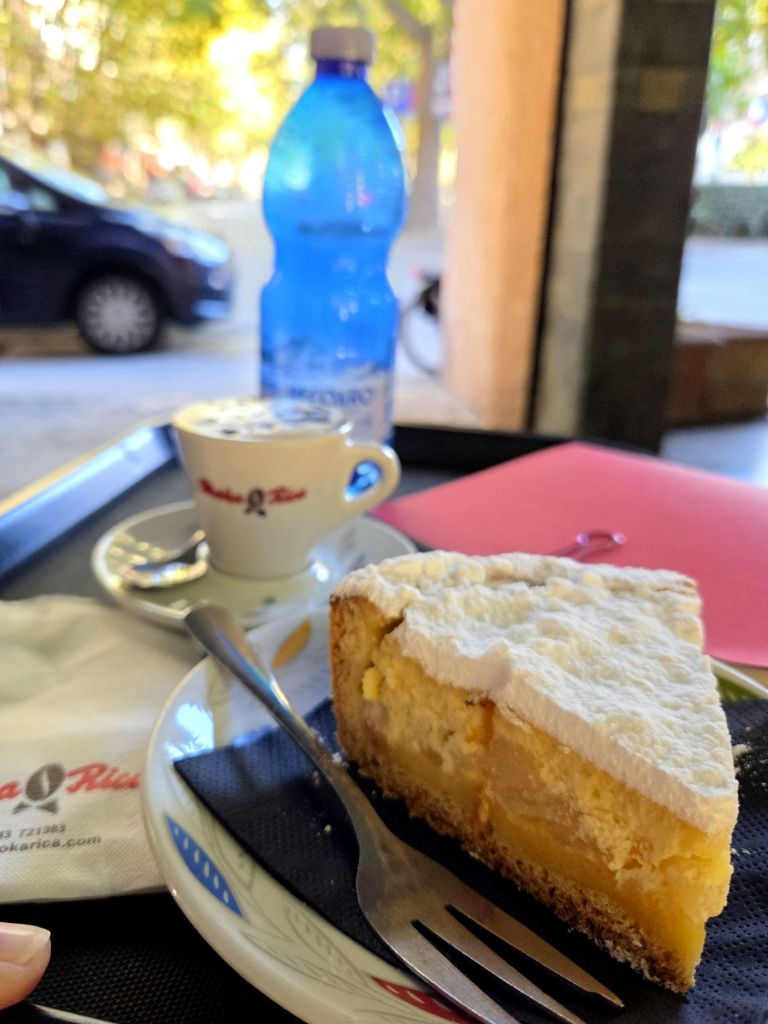
No lunch for me after all this, just a absolutely fantastic pear and ricotta cake and a macchiato before the return train. I cancelled my dinner res…I can’t do fine dining every night. Maybe more of that 72 hr pizza crust pizza.
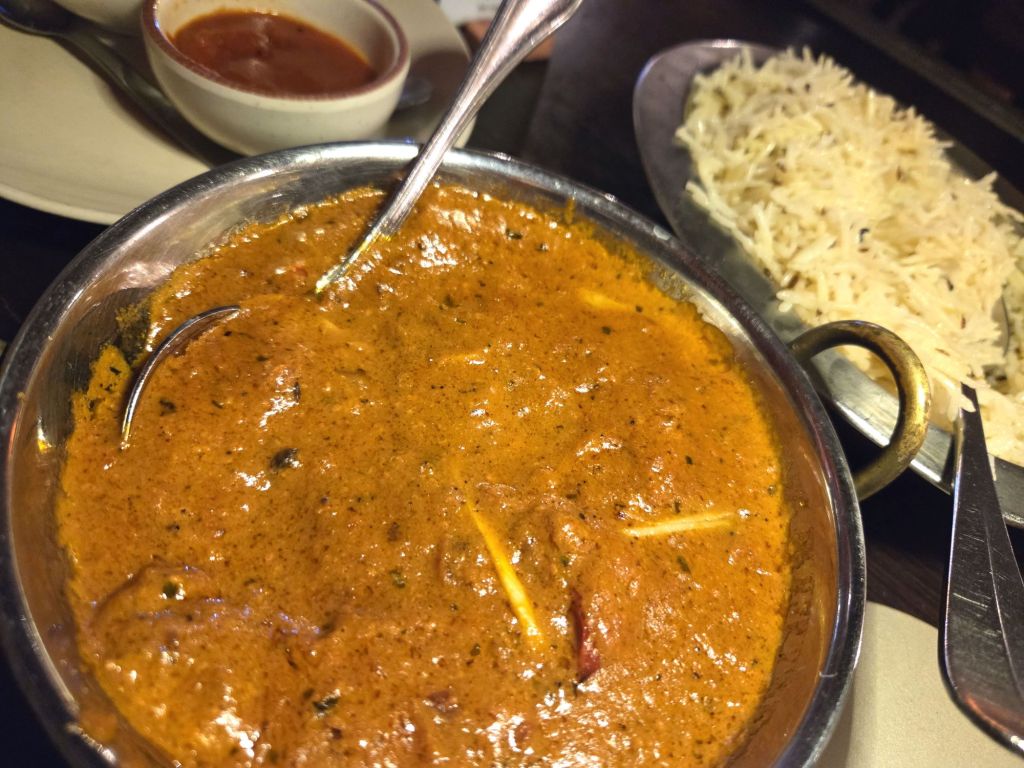
Sneak peek: I tried Indian instead and had the best Chicken Tikka Masala ever (I know you’re tired of hearing all the superlatives…) but I don’t joke about food…
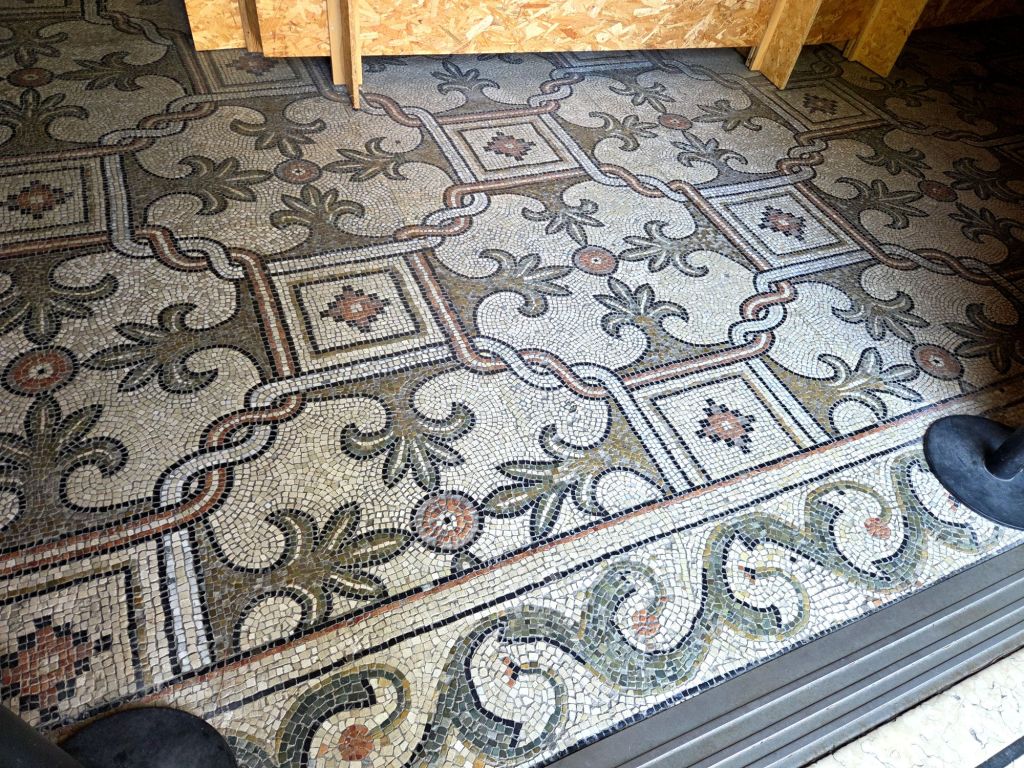
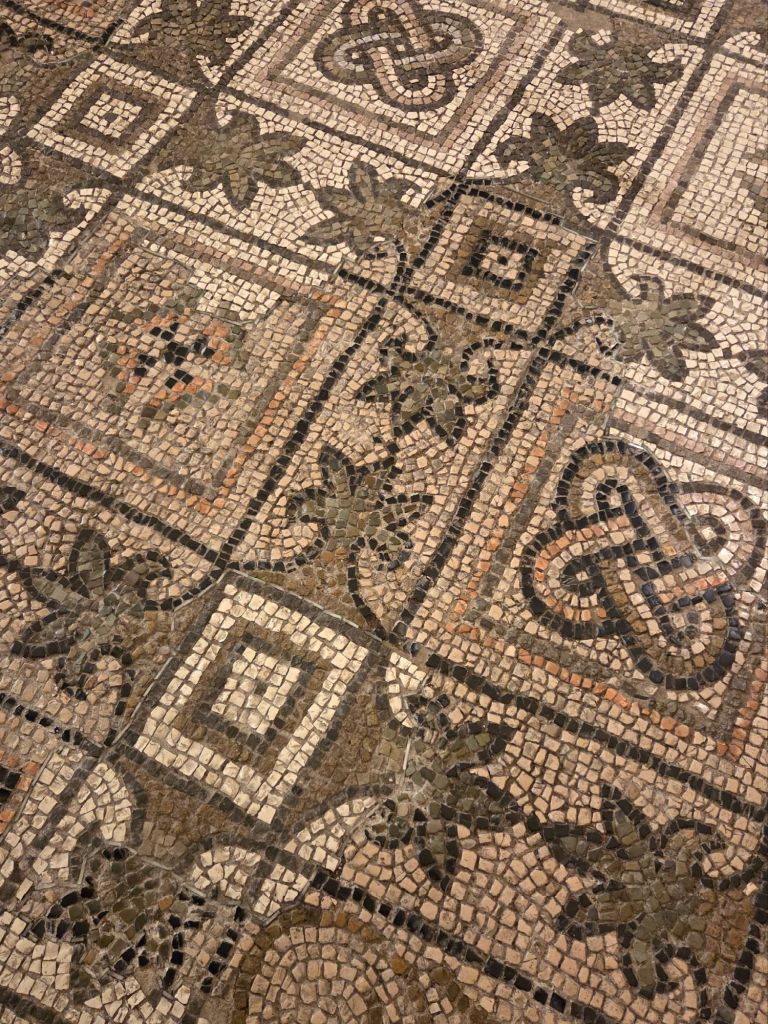
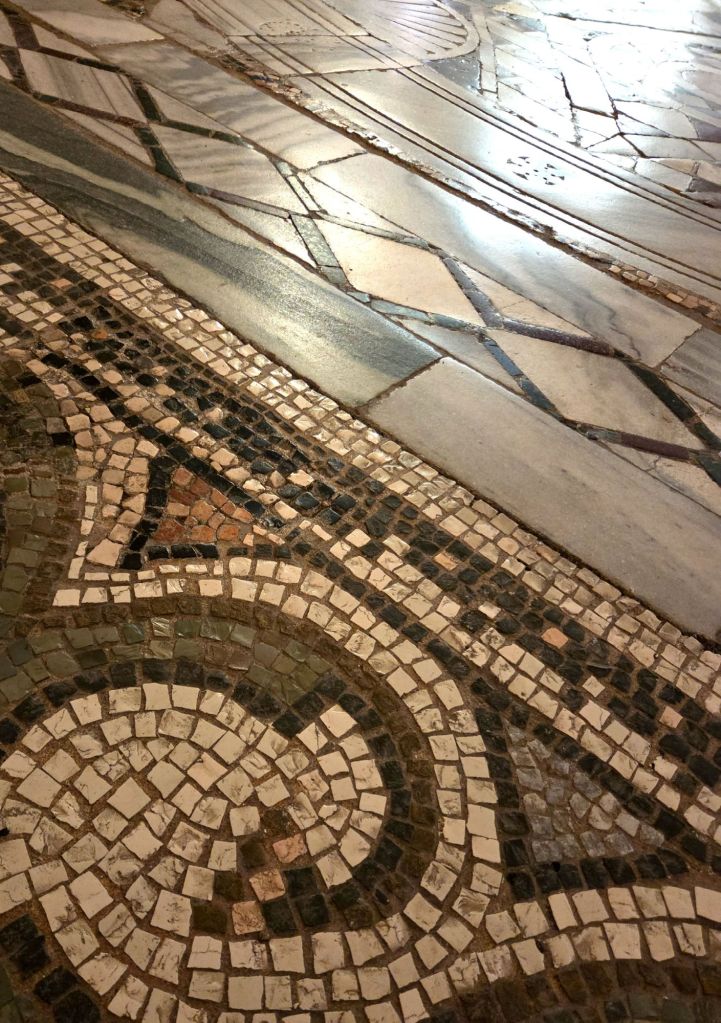
Ok back to mosaics for those of you that are interested. The pavement at the threshold of San Vitale told me immediately that we were in a very special place.
As I took in the enormity of the tesserae floor, I encountered the 25ft labyrinth pointing directly at the apse.
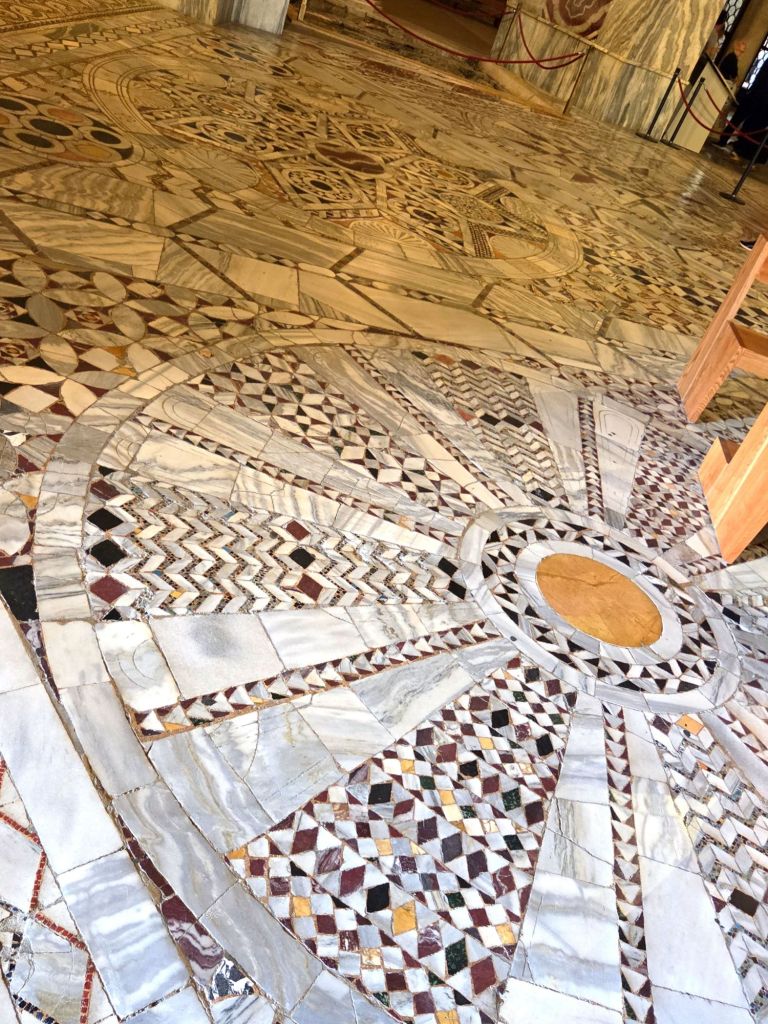
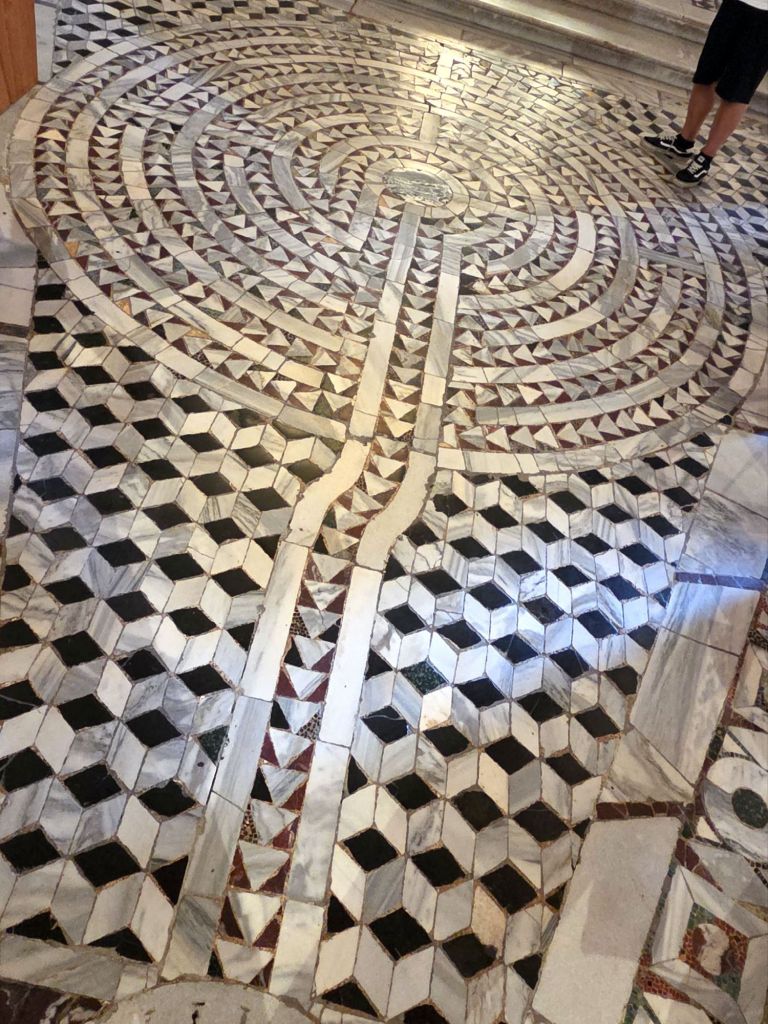
Regarding the labyrinth: https://www.ravennamosaici.it/en/labyrinth-san-vitale/: “The complex iconography of the labyrinth has its roots in the myth of Theseus who kills the Minotaur inside. From the floor mosaics of Roman villas, Christianity revisits this myth replacing Christ to Theseus and Satan to the Minotaur. (Hence) the continuous re-proposition of the labyrinth as a place of penance and spiritual rebirth.”
Then, incredibly, just ahead of the labyrinth, on the platform leading to the throne, a quincunx! Could this be a Cosmati pavement?? No, this floor was laid around 500 AD and the Cosmati family wouldn’t come to prominence for another 700 years.
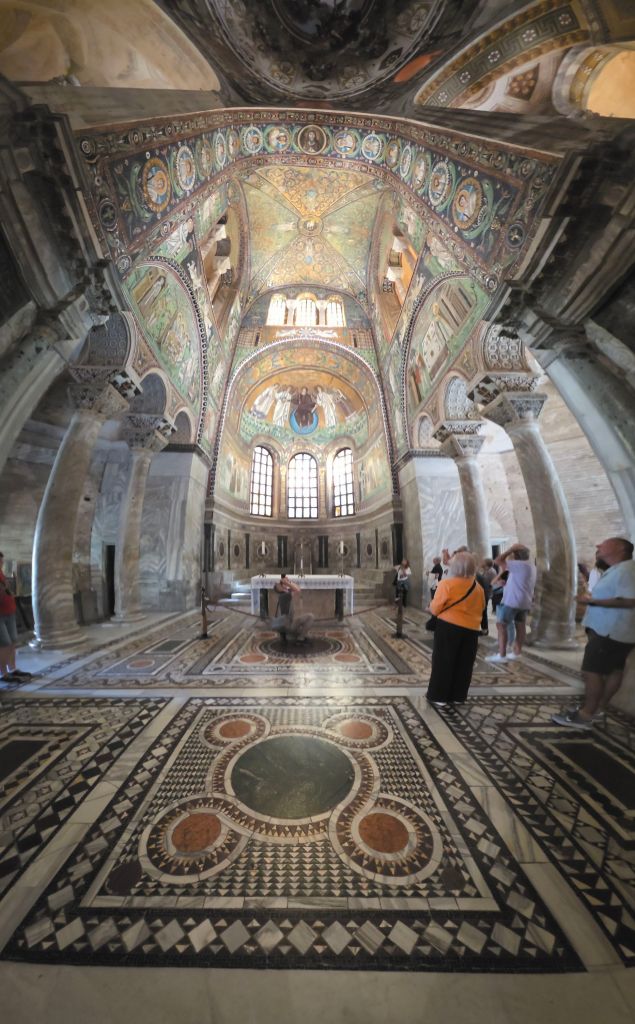
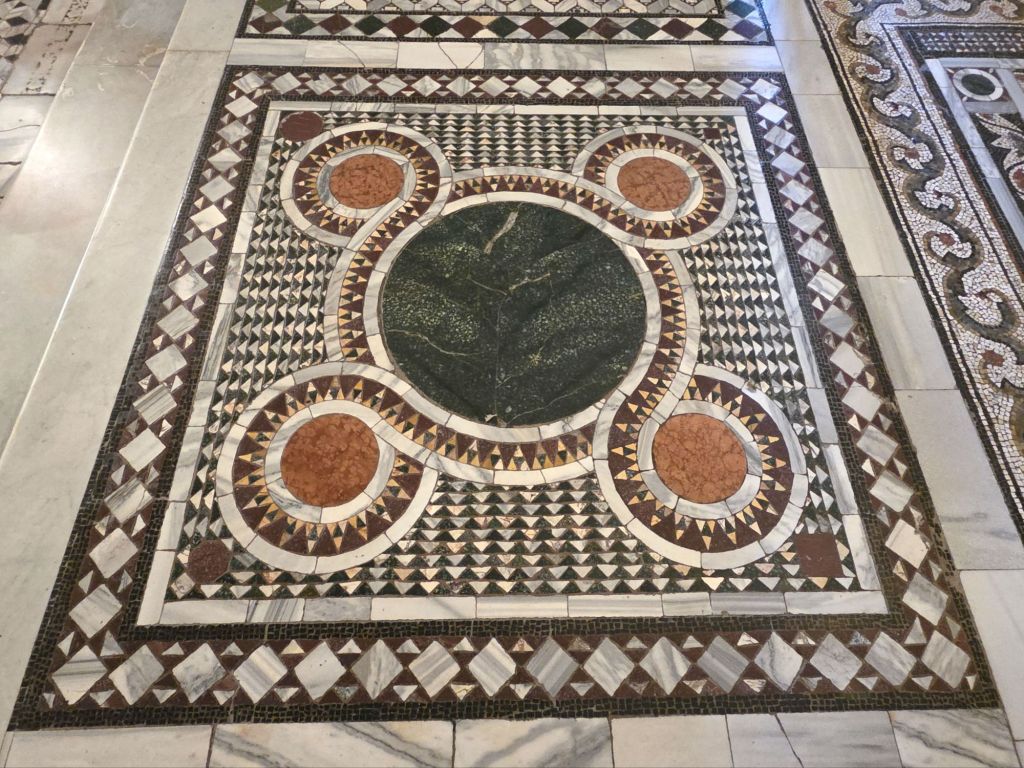
Per Google: The construction and decoration (of San Vitale) were initiated by Bishop Ecclesius around 526–527 CE, financed by the wealthy Greek banker and patron Julianus Argentarius (Julius Argentarius). …The actual mosaic work was executed by anonymous teams of skilled Byzantine master craftsmen and artisans brought from Constantinople… Furthermore, much of the original flooring did not survive intact; large portions of the floor mosaics were remade during a 16th-century renovation…and later restored or excavated in the 20th century.
While the floors are a bit rough compared to the exacting alignment and superior color choices of the later Cosmati pavements – see https://www.liturgicalartsjournal.com/2022/06/an-introduction-to-cosmati-and.html – they are still stunning. I love the quincunx design, it’s my holy Grail of opus sectile flooring.
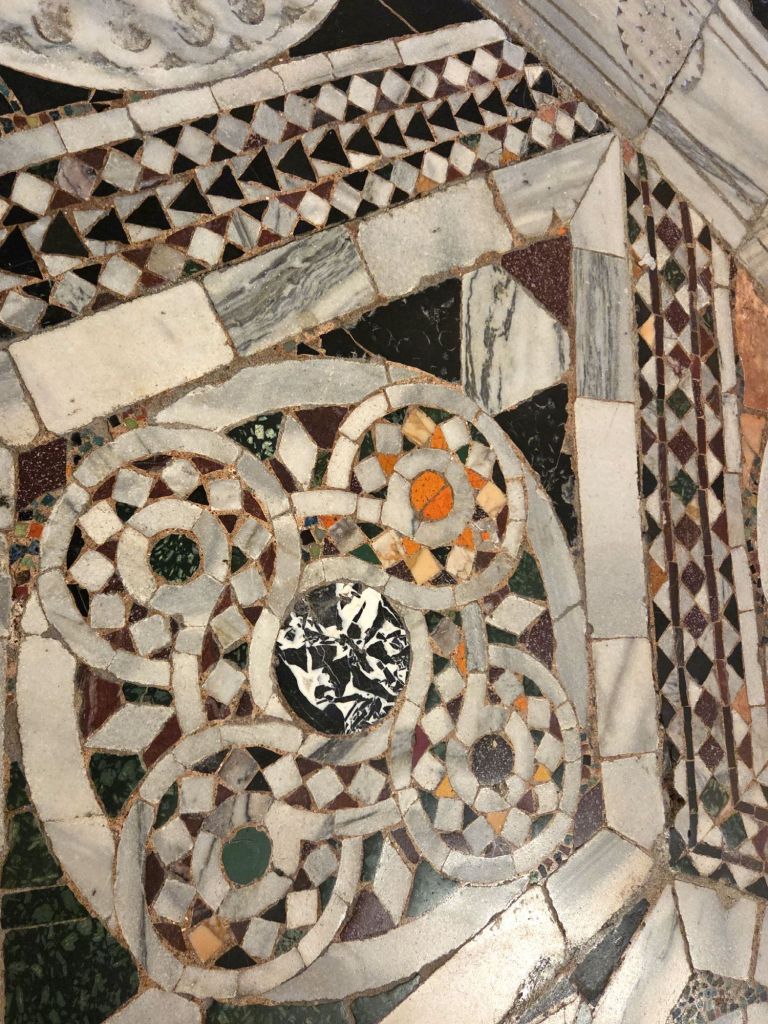
“The (tiled) floors in particular are attention grabbing — which is quite a feat when you think about it, given the amount of ornamentation found in your typical Roman church above the floor level.” (laj.com)
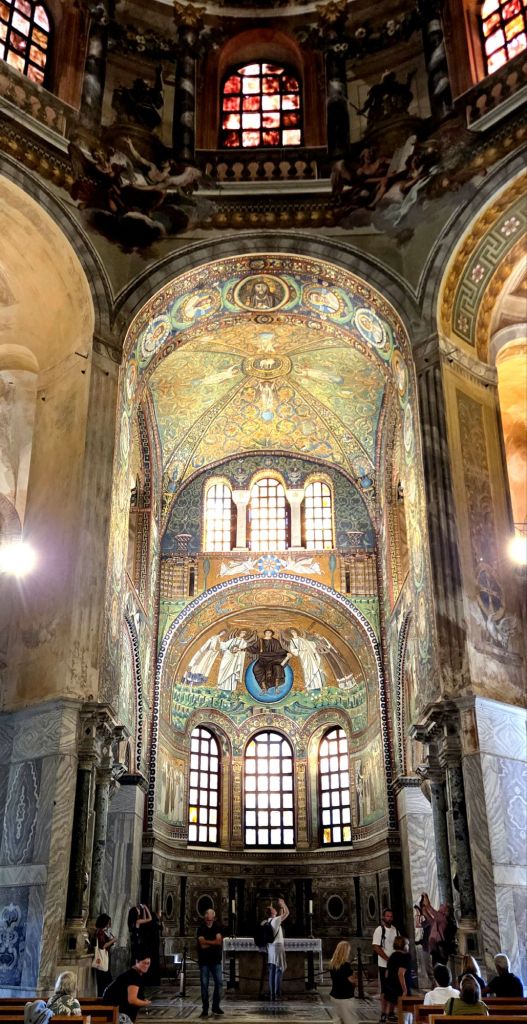
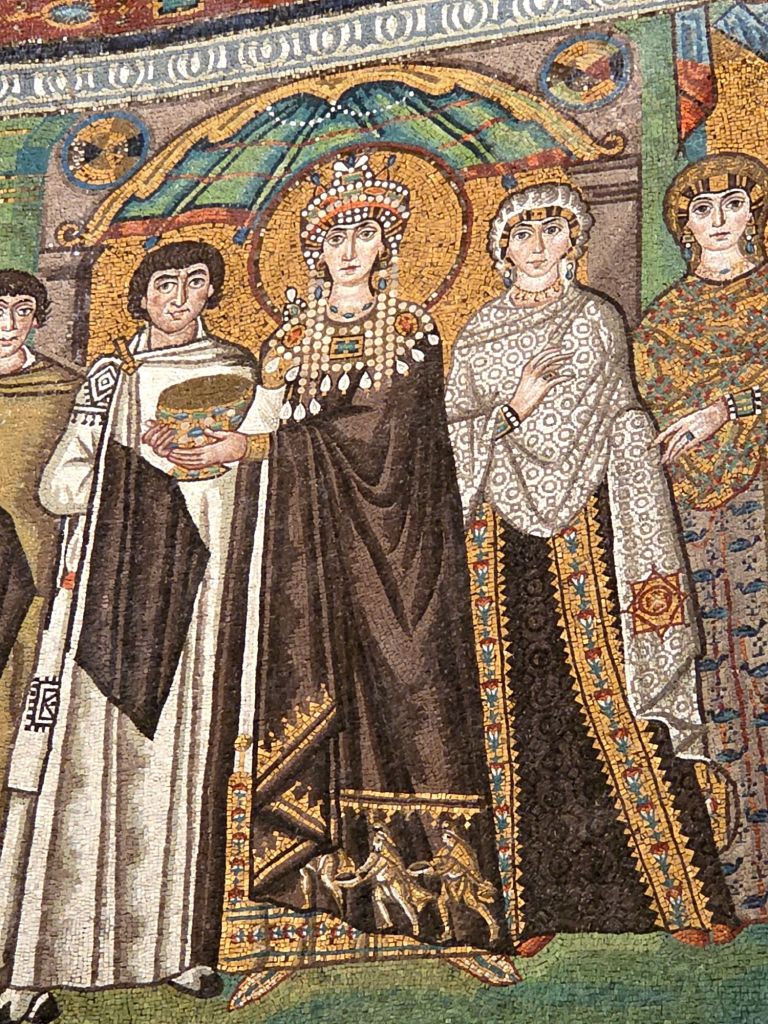
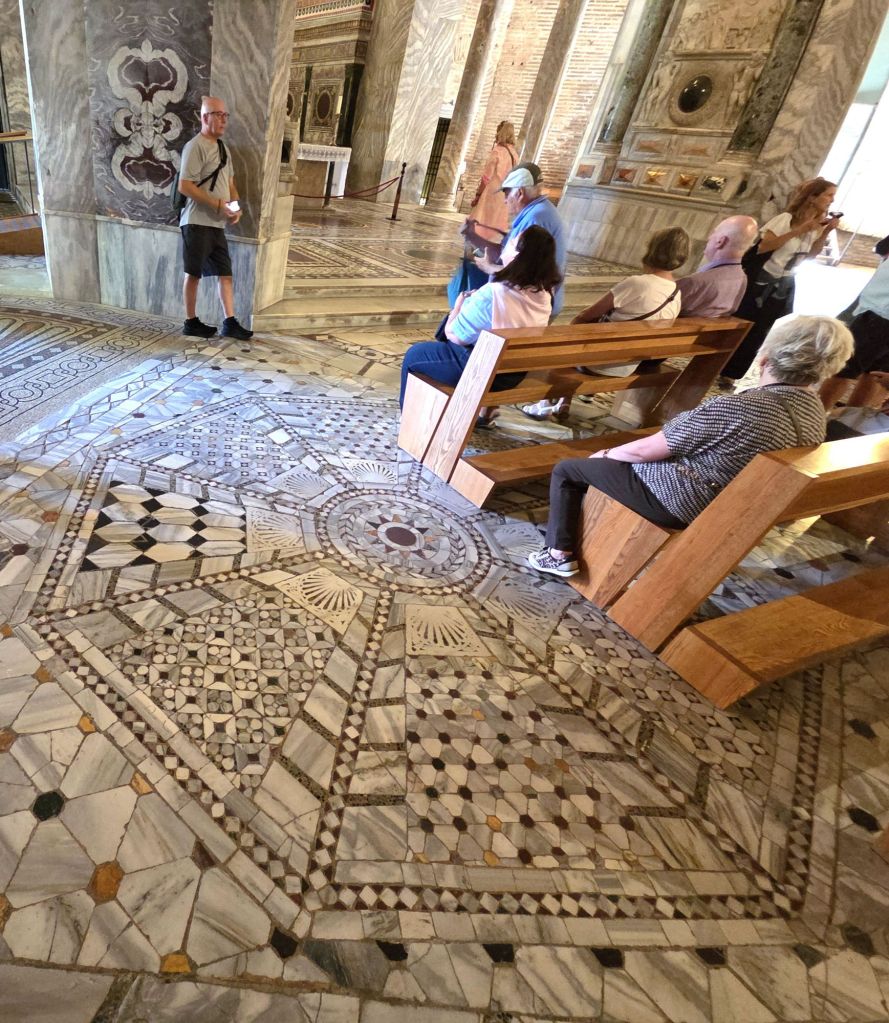
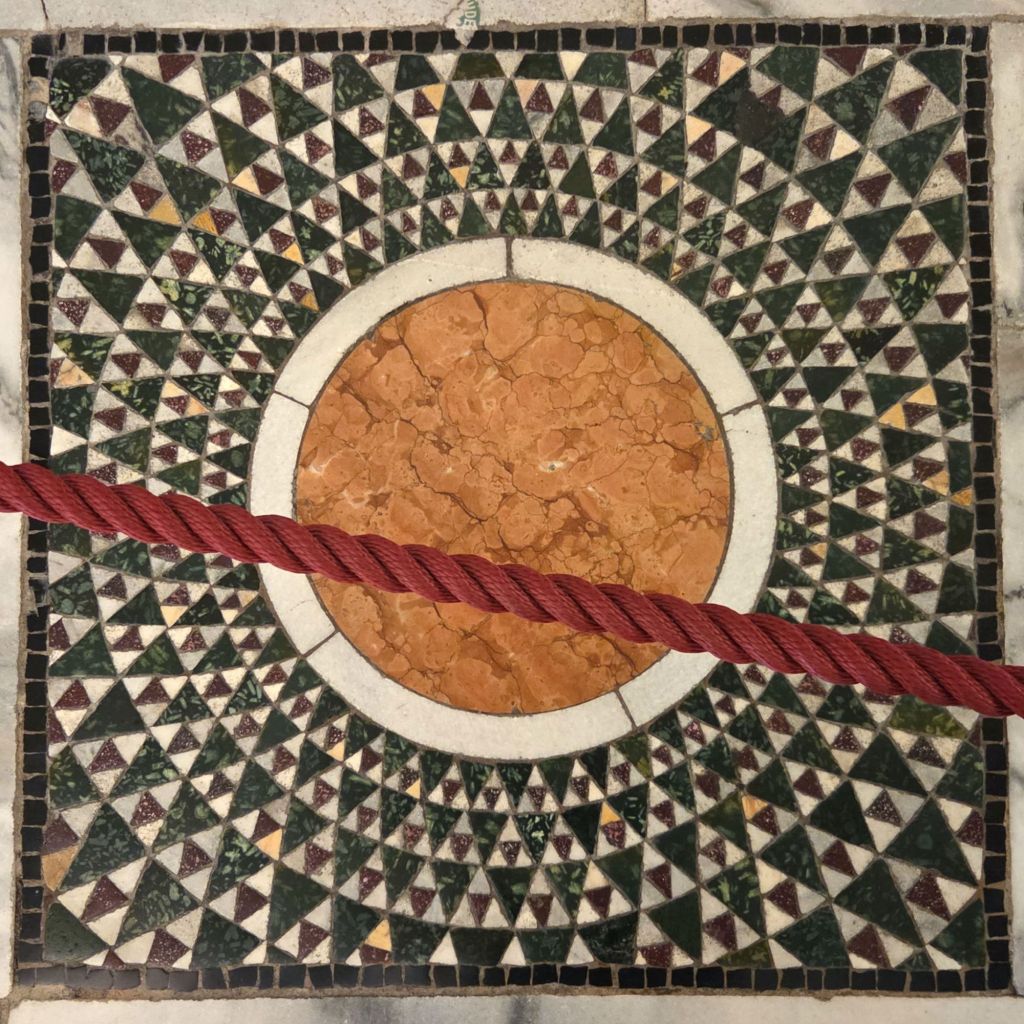
The floor layouts here are a pastiche of old and new plus significant retiling. And check out the super old, crudely carved columns holding up those splendid mosaic portraits. It’s this ingenuity and genius of splicing new onto old that you will never ever find in North America architecture.
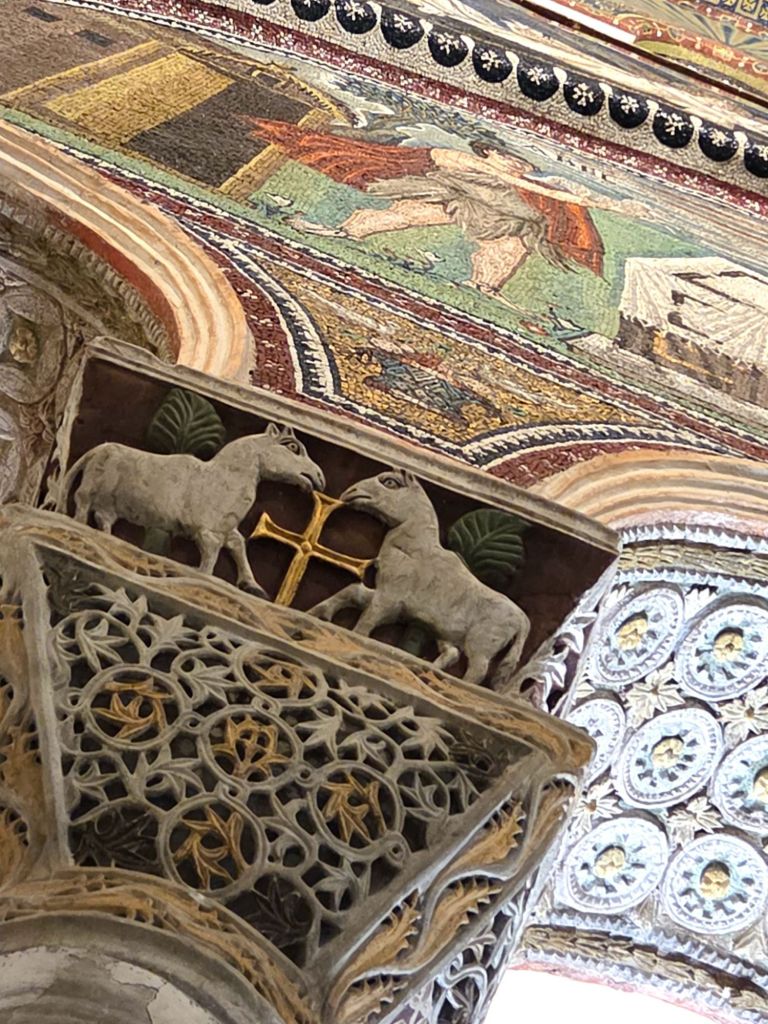
Basilica San Vitale was finished in 526 after the Eastern Roman Empire, projecting its power from Constantinople, re-took Ravenna from the Goths that had helped to end the western Roman Empire around 470. (Did you follow that). Great history lesson for Ravenna: https://mandalameadow.com/ravenna-mosaics/
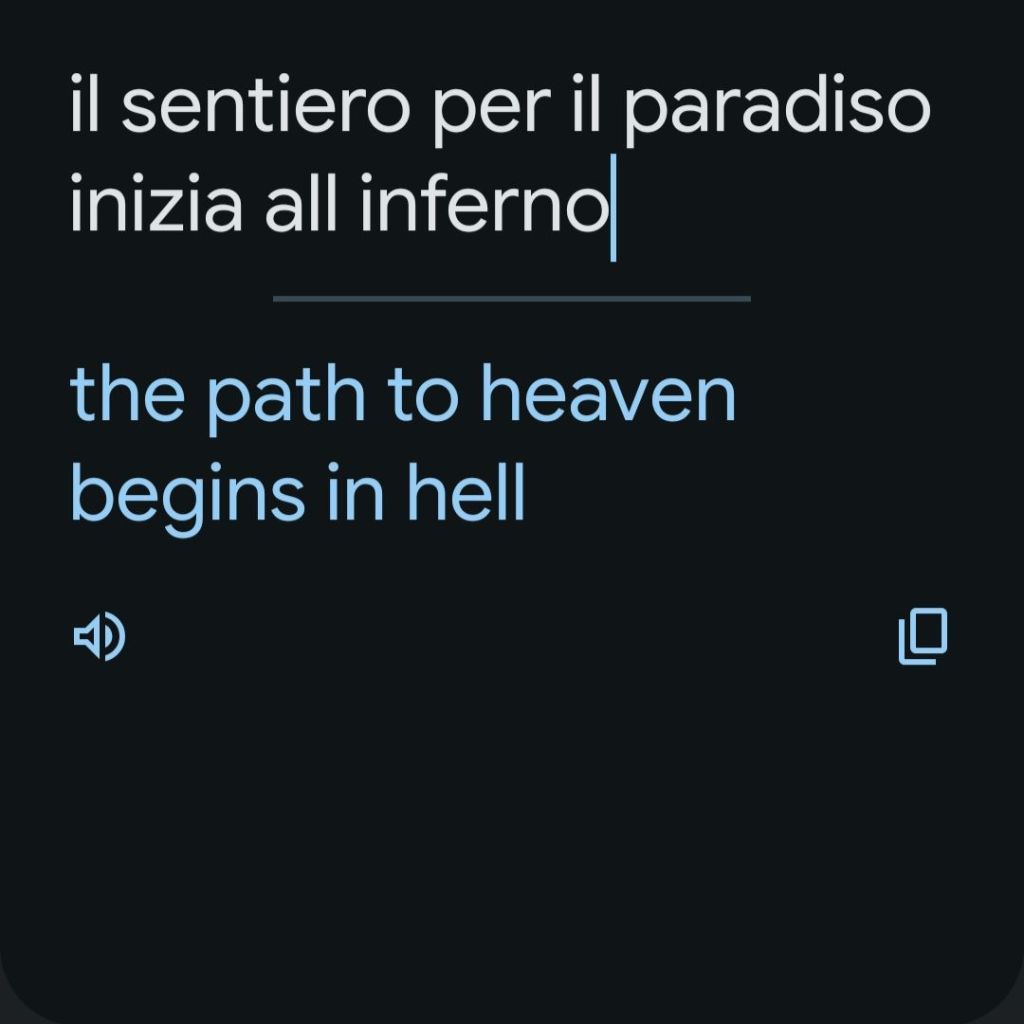
And for you Dante lovers, from Ravenna the resting place of Dante himself, a quote to liven up your next dinner party: